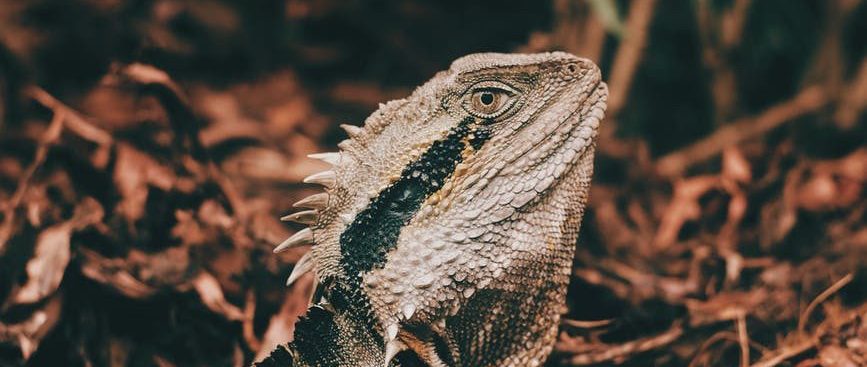
An adult bearded dragon needs an enclosure at least 4 ft long, 2 ft deep and 2 ft tall (4×2×2 ft, sold as “120 gallon”), and 6×2×2 ft is better. Buy the adult size from day one: beardies reach adult size at around 10 months, so a baby tank is outgrown within the year. A front-opening PVC enclosure holds heat best and is the easiest to light and clean.
As an Amazon Associate we earn from qualifying purchases. Links to Amazon below are affiliate links.
What size enclosure does a bearded dragon need?
Floor space matters more than height. A dragon needs room to move between a basking spot above 105°F and a cool end in the 70s°F, and a short tank cannot hold that gradient. Zen Habitats puts the minimum at 4×2×2 ft. ReptiFiles, the most detailed care source in the hobby, sets its minimum at 6×2×2 ft and accepts 4×2×2 ft only for small adults (Zen Habitats, ReptiFiles).
| Enclosure | Footprint | Verdict |
|---|---|---|
| 20–40 gallon tank or starter kit | about 36×18 in or smaller | Too small at any age past a few months. Skip it. |
| 75 gallon aquarium | 48×18 in, 21 in tall | Long enough but too narrow and short to hold a gradient and fit lighting. Below the minimum. |
| 4×2×2 ft (“120 gallon”) | 48×24 in, 24 in tall | The accepted minimum for one adult. |
| 6×2×2 ft | 72×24 in, 24 in tall | Recommended. A bigger gradient, and room for a dig box and climbing. |
| 8×2×2 ft or larger | 96×24 in | Ideal if you have the space. |
Gallons are a rough label for glass aquariums. Compare enclosures by their length, depth and height in feet or inches. In the UK the same box is usually sold as a 4ft vivarium (120×60×60 cm).
PVC vs glass vs wood: enclosure types compared
| Type | Holds heat | Weight | Humidity | Access | Good for |
|---|---|---|---|---|---|
| PVC (front-opening) | Best: solid sides and top | Light | Unaffected | Front doors | Most owners. The default choice. |
| Melamine or wood vivarium | Good | Heavy | Swells if it gets wet | Front glass sliders | Budget builds and UK vivariums. |
| Glass terrarium (front-opening) | Poor: loses heat through glass | Heavy | Unaffected | Front doors | Display. Needs more heat and a mesh top for lighting. |
| Glass aquarium (top-opening) | Poor | Heavy | Unaffected | Top only | Not recommended. Reaching in from above stresses the dragon. |
Mesh tops cut the UVB that reaches the basking spot, so a lamp over mesh has to sit closer than one mounted inside the enclosure (ReptiFiles).
The enclosures we would buy
- Best overall: Zen Habitats 4×2×2 ft PVC enclosure. Sold specifically for bearded dragons, light enough to move, and the PVC panels hold heat.
- Best upgrade: Zen Habitats 6×2×2 ft enclosure. The size ReptiFiles sets as its minimum. Buy this if you have the floor space.
- Best glass: REPTI ZOO 120 gallon (48×24×24 in) terrarium. Front doors and a full-size footprint, if you want glass for display. Plan for more heat in a cool room.
- Best wood: Carolina Custom Cages 48×24×24 in terrarium. A full-size 4×2×2 with front access, at a lower cost than most PVC.
Check the listed internal dimensions before you buy. Some “120 gallon” listings measure the outside of the frame.
How to set up a bearded dragon enclosure
- Place it. Put it in a room that stays above about 65°F, out of direct sun through a window, and on a stand that can take the weight.
- Fit the UVB. Use a T5 HO tube such as the Arcadia Desert 12% or Zoo Med ReptiSun 10.0, about half the enclosure’s length (22 in for a 4 ft enclosure), on the warm side. Aim for a UVI of 4.0–4.5 at the basking spot. With the Arcadia 12% that is about 11 in below the lamp through mesh, or 16–17 in with no mesh. Replace the tube every 12 months.
- Add basking heat. Use halogen flood bulbs in a dome lamp with a ceramic socket, two side by side so the whole body is warmed. Aim for a basking surface of 105–115°F, with the cool end at 70–85°F.
- Measure, don’t guess. Read the basking surface with an infrared temperature gun, and the cool end with a digital thermometer and hygrometer. Humidity should sit at 30–60%.
- Lay the substrate. Our substrate guide compares the options.
- Furnish it. Add a solid basking platform under the lamps, branches or cork for climbing, a hide on the cool end, and plants. A bare tank is a stressed dragon.
- Set a timer. Run lights and heat for 12–14 hours a day and switch everything off at night. Most homes don’t need night heat. ReptiFiles accepts night temperatures down to the mid-50s°F.
Temperatures, UVB distances and the 12-month replacement interval are from the ReptiFiles lighting and heating guide and the ReptiFiles care sheet. Daily routines are in our bearded dragon care guide, and what to feed is in the food guide.
Common enclosure mistakes
- Buying a starter kit. Most kits are 20–40 gallons, often with a compact or coil UVB bulb. The tank and the lighting both get replaced within a year.
- Housing two dragons together. ReptiFiles advises against cohabiting bearded dragons in any combination. Two males fight, and a male and female breed.
- Lighting through mesh without adjusting. A UVB lamp set at the no-mesh distance on top of a screen lid delivers too little UVB to the basking spot.
- Measuring air instead of surface temperature. A stick-on dial reads neither. Use a temperature gun on the basking surface.
- A tall, narrow tank. Height is less useful than floor space for a ground-dwelling lizard that basks.
Bearded dragon enclosure FAQ
Is a 40 gallon tank big enough for a bearded dragon?
No. A 40 gallon tank is about 36×18 in, well under the 4×2×2 ft minimum. Even a baby outgrows it within months, so buy the adult enclosure first.
Can a baby bearded dragon live in a 4×2×2 enclosure?
Yes. Zen Habitats recommends starting a young dragon in an adult-sized enclosure. Give it plenty of cover and keep food where it can find it.
What is the best enclosure material for a bearded dragon?
PVC for most people. It holds heat, doesn’t mind humidity, is light, and opens from the front. Wood vivariums also hold heat well but are heavy. Glass looks good but loses heat.
How hot should a bearded dragon enclosure be?
The basking surface should be 105–115°F, the cool end 70–85°F, and nights can drop into the 60s or mid-50s°F with the heat off.
Can two bearded dragons share an enclosure?
No. Keep one dragon per enclosure. Pairs fight or breed, and the weaker dragon is often kept from food and heat.
Is a vivarium the same as an enclosure?
Yes. “Vivarium” is the usual UK word, typically a wood or melamine box with glass front doors. A 4ft vivarium (120×60×60 cm) is the same minimum as a 4×2×2 ft enclosure.